
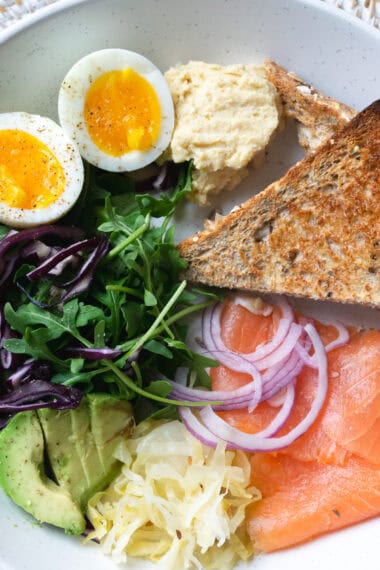

breakfast plate with boiled eggs, greens, avocado, sauerkraut, smoked salmon and toast

Before I went to school for holistic nutrition, I had already been on my health journey for a few years and was eating what I considered to be a pretty healthy diet. I ditched the package food, was eating plenty of whole foods, and exercising regularly. However, something was still missing. My energy levels were all over the place, I  found myself hungry shortly after eating, and was craving sugar and carbs throughout the day. It wasn’t until I learned more about nutrition that I started to realize that even though I was eating healthy, I had been missing a piece of the puzzle. I wasn’t at all paying attention to how my meals were affecting my blood sugar. 

Why is Blood Sugar Balance Important?

Blood sugar balance isn’t just something people with prediabetes or diabetes need to pay attention to. Balanced blood sugar levels can have a huge impact on our quality of life and is essential for reaching nearly any health goal. 

When balanced, not too high or too low, our energy and mood are stable, we sleep well, have less food cravings, and our hormones are supported. However if imbalanced, it can lead to anxiety, low energy, trouble concentrating, poor sleep, irritability, increased cravings for sugar and carbs, brain fog and weight gain, especially around the waist. In the long term, it can put you at risk for developing heart disease, diabetes and other chronic health issues.

The good news is that small changes to our diet can make a big difference when it comes to blood sugar management. 

What you eat for your first meal of the day is a great place to start. Starting the day with a balanced meal helps you avoid hopping on the blood sugar rollercoaster, which means you’ll have better energy throughout the day and be less likely to have to rely on caffeine and sugar. 

Eating for Blood Sugar Balance

Every single time we eat, we have the opportunity to nourish our bodies in a way that supports our energy, mood, and overall health. Unfortunately, a lot of traditional breakfasts foods are loaded with sugar and have very little, if any, fibre or protein. That muffin or coffee you grab in the morning on the way to work might give you that quick boost of energy that you’re looking for, however it also causes blood sugar levels to quickly spike. Then they fall just as fast, leaving you exhausted, cranky, and craving another sweet treat that will spike your blood sugar levels again.

The first step in stabilizing blood sugar is to focus more on consuming high-quality whole foods and minimizing processed foods, which are often high in sugar, refined carbs and low in fibre and protein.

Next, you want to ensure you’re balancing your meals with a good source of protein, fibre and healthy fats. The three of these slow down the absorption of sugar into the blood stream, avoiding those large spikes. This means you feel more satisfied after eating, stay full for longer and have more stable energy throughout the day. Who doesn’t want that? This is especially important when you’re eating carbohydrates, which have the most impact on blood sugar. This could look like having your apple with some almond butter or a handful of nuts, adding some avocado and eggs to your sourdough toast or adding protein powder to your fruit smoothie. 

cottage cheese in a white bowl topped with egg, kale, avocado, kimchi and green onion.

Breakfast Ideas

Creating a breakfast that supports blood sugar doesn’t need to be complicated! Sometimes it’s just a matter of adding a good source of protein, fibre or fat. Here are some ideas for a healthy, blood-sugar balancing breakfast:

1. Eggs
I’m a huge fan of eggs for breakfast. Fried, scrambled, poached, hard boiled, baked – they’re all delicious and super nutritious! Eggs are full of protein, choline, vitamin D and B12. Pair them with some veggies (fibre) and avocado (fat) and you have yourself a delicious meal to start the day. Here are some of my favourite ways to enjoy them:

  • Frittata with pesto and greens
  • Sourdough toast topped with avocado, cottage cheese and poached eggs
  • Hard boiled eggs with smoked salmon, spinach and sweet potato 
  • Breakfast tacos with soft scrambled eggs, chicken sausage or black beans, spinach, avocado and salsa
  • Veggie, sausage and egg hash with avocado

2. Chia seed pudding
Chia seed pudding is the perfect make-ahead option for those busy mornings. Chia seeds are a good source of fibre and omega 3 fats. The flavour combinations are endless – chocolate, vanilla, pumpkin spice, strawberry. Adding some protein powder is a good way to boost the protein content as well. Not a fan of the texture of chia seed pudding? Try blending the mixture before allowing it to sit overnight. In the morning top it with your favourite nut butter, blueberries or some yogurt.

3. Yogurt breakfast bowls
Unsweetened, full-fat greek yogurt is packed with protein and makes a great base for a delicious yogurt bowl. You could also use an unsweetened plant-based yogurt if you’re dairy-free. Top with fresh or stewed fruit, nuts and seeds, low-sugar granola, or a crumbled home-made muffin. For an extra dose of protein, try adding some protein powder to the yogurt. One of my favourite yogurt breakfast bowls is greek yogurt mixed with pumpkin puree, vanilla protein powder and pumpkin pie spice, topped with sautéed apples, nut butter and a little granola. I’ll often have this with a side of eggs to make it a more filling meal.

4. Cottage cheese bowls 
If you eat dairy, cottage cheese is a really easy way to get in a bunch of protein. A cup will give you around 30g of protein. You can either go the sweet route and top it with some berries or try savoury by topping with eggs, avocado and some cooked veggies (my personal favourite). 

5. Protein smoothies
Smoothies are a super quick and nutritious breakfast option, however the ingredients you use will affect your blood sugar in different ways. Instead of relying solely on fruit, try adding a scoop of your favourite protein powder, a spoonful of nut/seed butter or avocado for some healthy fats and a handful of greens or frozen zucchini for some extra fibre and a serving of veggies. Adding some greek yogurt is also a great way to add some additional protein to your smoothie. 

6. Leftovers 
Breakfast doesn’t always have to look like what we typically think of as “breakfast foods”. Eating leftovers from dinner the night before is actually a great high-protein option. I’ll often take leftover veggies and protein, reheat it in a pan and then add a fried egg. It’s filling, tastes great and helps reduce any food waste!

Next time you reach for breakfast in the morning, focus on getting in enough protein and include some sort of healthy fat and fibre.. Being a little more aware of what we eat first thing in the morning and how it can affect our blood sugar can make all the difference in how we feel for the rest of the day and avoid those crashes later on! 

a cup of bone broth with a fresh rosemary spring being held on someone's lap.

One of the most common digestive symptoms I see people experience is bloating. Although bloating once in awhile can happen to all of us, chronic bloating is definitely not normal! This can be an indication that something deeper is going on in your body and that your digestive system isn’t working optimally.

There are a variety of reasons why someone can experience bloating and more often than not, there are a few factors going on that are contributing to this discomfort. Some of these can be easily corrected and others may be more serious and require more attention and care. Maybe you’ve already tried cutting out certain foods or changing up your diet, but are still experiencing bloating. Although the food we eat can certainly play a role, something that is often overlooked is our daily habits and HOW we eat.

Today we’ll be looking at some lifestyle factors that affect gut health and simple steps you can take to support your digestion and reduce bloating.

Eating habits to reduce bloating and improve digestion

Slow down and eat mindfully

How often do you find yourself sitting down for a meal without any distractions and truly just focusing on the food that you’re eating? For most people, mealtime is often paired with scrolling on social media, answering emails, catching up on a tv show or eating on the go or in the car.

Eating is a time when we really benefit from putting away any distractions, slowing down and trying to be more present in order to really support digestion. Cooking your own food not only supports your health, but it’s also a great way to prepare your body to digest your meals. While cooking, the aromas can stimulate your body to release digestive enzymes that are important for breaking down food. While eating, focus on how each bite of your food tastes and try putting your fork down after each bite. This helps us to slow down and gives your body enough time to recognize that it’s full so you can avoid overeating, which can also lead to bloating.

Chew your food well

Chewing is an essential, but often overlooked, part of healthy digestion. When you chew, it stimulates saliva which contains enzymes that begin breaking down food. It also signals to other digestive organs that food is on its way. Chewing food well helps to break everything down properly, allowing nutrients to be fully extracted and supporting optimal digestion. This can make a huge difference on how you feel after a meal, especially if you experience bloating or gas after eating.

We should really be chewing our food until it’s almost liquid, about 30 times per bite. This might seem like a lot at first, but overtime it will become something you’ll begin to do naturally. It also forces you to slow down and to be more mindful during eating.

Lifestyle habits to reduce bloating and improve digestion

Stay hydrated 

Your body needs water – a lot of it! Staying hydrated is essential for good health, but it can also help prevent bloating. When we’re dehydrated, it can exacerbate constipation and worsen any bloating. This is especially true if you’ve increased your fibre intake without enough water.

However, staying hydrated is more than just drinking water, especially in the warmer months or if you’re quite active. It’s important to make sure that you’re also replenishing electrolytes. This can be as simple as adding a pinch or two of a good quality sea salt or pink Himalayan salt to your water. You can also add an electrolyte powder to your water, such as Ultima electrolytes or LMNT electrolytes

When you first wake up, make sure that you’re reaching for water before having any coffee. If you don’t like the taste of plain water you can easily flavour it by adding fresh lemon or lime juice, sliced cucumbers or fresh herbs like mint or rosemary. Herbal teas are also a delicious way to stay hydrated! Ginger, peppermint, and fennel are all great options as they can support digestion and soothe an uncomfortable belly. It’s also best to limit carbonated drinks. These can trap gas in your digestive system, leading to gas and bloating.

Address stress

In order for our bodies to release the saliva, stomach acid and digestive enzymes needed for optimal digestion, we need to be in the “rest and digest” state. Unfortunately, a lot of people are often going through their day in a constant state of stress, which puts the body into “fight or flight” mode. In this state, your body pumps out cortisol and the body systems that are non-essential to your immediate survival, such as the digestive system, are turned off to preserve energy for protection from the “threat” it believes we’re facing.

Managing stress is essential for our health overall, but it can also be a huge game changer when it comes to optimizing digestion and reduce bloating. Try adding more self-care or stress reducing techniques into your daily routine. Deep breathing, meditation, journaling, yoga, taking a warm bath with magnesium and calming essential oils, a massage or just cozying up with a hot tea and a good book are all great ways to reduce stress and help calm the nervous system so that you’re not in that “fight-or-flight” mode while eating.

Another trick that has really helped me personally, is taking a few deep belly breaths before meals. This triggers the relaxation response of the body, “rest-and-digest,” which will support digestion.

Move your body

Regular movement helps your digestive system function optimally and can improve intestinal gas clearance. If you’re experiencing chronic stress, light exercise such as yoga or walking can be a better option over intense exercise. These can help reduce stress and promote relaxation, whereas intense exercise can cause the body to go into a stressful state.

Bottom Line

Digestion plays a major role in our health and how we feel each day. These simple steps are a great first place to start if you’re experiencing bloating. However, if bloating symptoms persist or you’re regularly experiencing GI symptoms, it’s important to dig deeper and get to the root cause. Bloating can be complicated and what works for one person might not work for someone else. I recommend working with a holistic nutritionist, like myself, or another health care provider to help you get to the root cause and support you in making the necessary diet and lifestyle changes!